Best Robot Vacuum for High Thresholds (and How to Stop Yours Getting Stuck)
The best robot vacuum for high thresholds: Roborock, Dreame, eufy and Ecovacs models that climb tall door sills, plus cheap ramps and fixes for getting stuck.
Disclosure: HomeTechAdviser is reader-supported. We may earn a commission when you buy through links on this page, at no extra cost to you. As an Amazon Associate we earn from qualifying purchases. Read our affiliate disclosure.
In this article
- Single vs double thresholds: read the fine print
- Compared at a glance
- The picks
- The cheap fix: threshold ramps
- Why robots get stuck (and how to fix it)
- FAQ
- How high can a robot vacuum climb?
- What is a double-layer threshold?
- Can a robot vacuum go over a sliding door track?
- Why does my robot vacuum avoid my dark rug?
- Do threshold ramps work for robot vacuums?
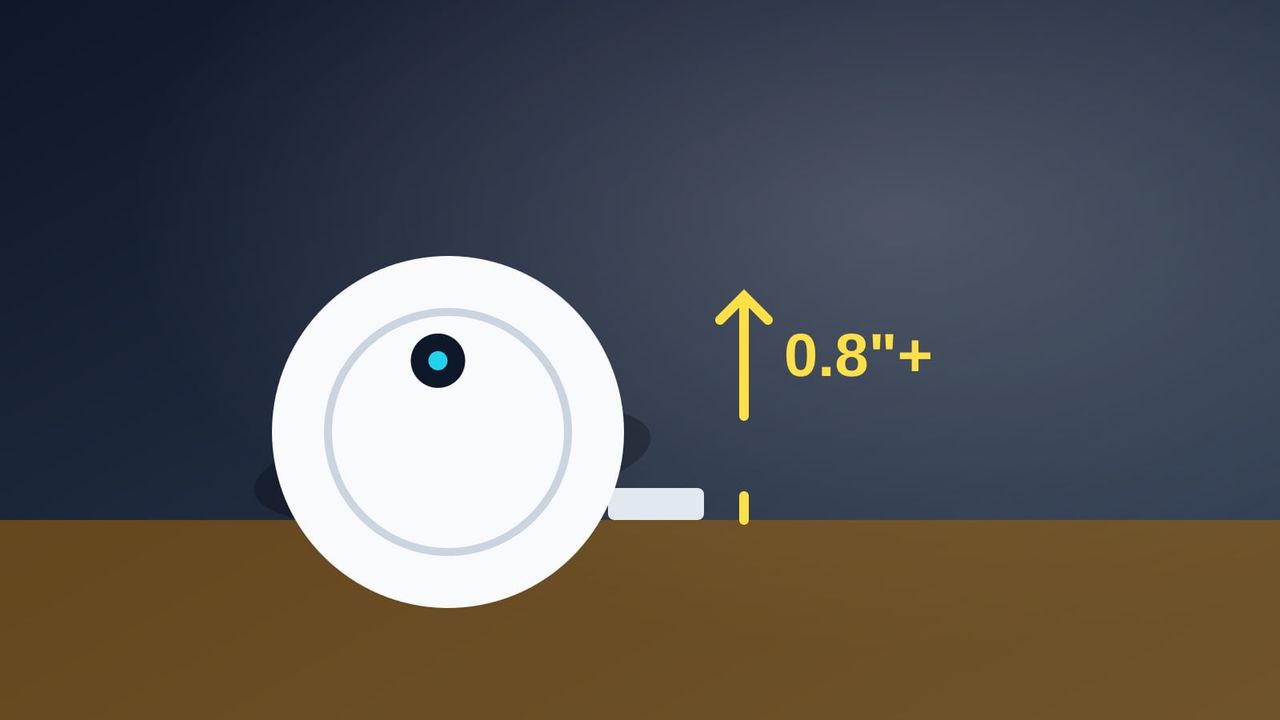
If your robot vacuum stops at every doorway, you need a robot vacuum for high thresholds. Most robots can only climb about 0.8 inches (2 cm). Taller door sills, stepped transition strips, thick rug edges and sliding-door tracks leave whole rooms uncleaned, and sometimes leave the robot stuck. A new generation of robots can lift their chassis or “step” over obstacles more than twice that height.
Quick answer: measure your tallest threshold first. Up to about 1.4 in (3.5 cm) as a single step, the eufy Omni S2 handles it. For tall stepped or double-layer thresholds, the Roborock Saros 20 (up to 3.46 in combined) and Dreame X50 Ultra (up to 2.36 in across two steps) climb the highest. If your sills are only a little over 0.8 in, a cheap threshold ramp plus a standard robot like the Roborock Q10 S5+ is the budget fix.
We chose these by comparing the climb heights each manufacturer publishes. We haven’t tested them ourselves.
Single vs double thresholds: read the fine print
Brands quote climb heights in two different ways, and the headline number is usually the bigger one.
- Single threshold: one vertical step, like a raised wooden door sill.
- Double-layer (stepped) threshold: two smaller steps, one after the other, like a transition strip in front of a sill. Robots can manage a taller total height when it comes in two steps.
Measure yours: use a ruler to find the tallest single vertical rise, and note whether there’s a second step. For context, US accessibility rules limit new door thresholds to 1/2 in (or 3/4 in beveled on some existing doors), but older homes often have taller sills.
Compared at a glance
| Product | Single step | Stepped / double-layer | Self-empty dock | Mop |
|---|---|---|---|---|
| Highest climberRoborock Saros 20Check price | Not stated by Roborock | Up to 3.46 in (1.77 + 1.69 in) | Yes | Yes |
| Stepped thresholdsDreame X50 UltraCheck price | Up to 1.65 in (4.2 cm) | Up to 2.36 in (6 cm), two steps | Yes | Yes |
| Tall single sillseufy Omni S2Check price | Up to 1.38 in (3.5 cm) | Up to 1.65 in (4.2 cm) | Yes | Yes (roller) |
| Door tracksEcovacs Deebot X11 OmniCycloneCheck price | Up to 0.94 in (2.4 cm) | Up to 1.57 in (4 cm), incl. sliding-door tracks | Yes (bagless) | Yes (roller) |
| Budget + rampsRoborock Q10 S5+Check price | About 0.79 in (2 cm) | – | Yes | Yes |
The picks
Roborock Saros 20
Roborock’s lifting chassis raises the robot to climb stepped obstacles that stop most robots. Its headline figure is for a two-step threshold, so check your doorway has that shape. Independent reviews of the same chassis reported clearing well over an inch on single steps, but Roborock’s own single-step number isn’t published.
- Pro: Roborock quotes double-layer thresholds up to 3.46 in (1.77 + 1.69 in)
- Pro: Self-emptying, self-washing dock
- Pro: Lifting "AdaptiLift" chassis
- Con: Roborock doesn't publish a single-step figure
- Con: Premium price
Dreame X50 Ultra
Dreame’s footnotes are refreshingly clear: the 6 cm headline needs two steps with enough room between them, and a single vertical step tops out at 4.2 cm (about 1.65 in). That’s still about double a typical robot. The retractable LiDAR also helps it get under low sofas.
- Pro: "ProLeap" climbs up to 2.36 in (6 cm) across two steps
- Pro: Single vertical step up to about 1.65 in (4.2 cm)
- Pro: Retractable LiDAR for low furniture
- Con: The 6 cm figure needs two separate steps with space between them
eufy Omni S2
If your problem is one tall wooden sill rather than a stepped transition, the Omni S2’s single-step figure is among the highest published. It also mops with a roller and empties itself.
- Pro: Single thresholds up to 1.38 in (3.5 cm)
- Pro: Double thresholds up to 1.65 in (4.2 cm)
- Pro: Roller mop and self-emptying dock
- Con: eufy's own buying guide swaps the single and double figures, so we use the product page
Ecovacs Deebot X11 OmniCyclone
Sliding-door tracks are a special trap: robots can drop into the channel and not get out. Ecovacs specifically quotes sliding-door tracks for the X11’s “TruePass” system, which makes it the one to look at if that’s your problem doorway.
- Pro: Ecovacs quotes multi-layer thresholds and sliding-door tracks up to 1.57 in (4 cm)
- Pro: Bagless self-empty station
- Pro: Roller mop
- Con: Single-step figure is lower, about 0.94 in (2.4 cm)
Roborock Q10 S5+
If your thresholds are only a little over 0.8 in, you don’t need a flagship. A standard robot plus a small rubber ramp on each problem doorway costs far less. Roborock’s support page gives 2 cm as the climbing ability of its standard models.
- Pro: LiDAR navigation and a self-emptying dock
- Pro: Much cheaper than lifting-chassis models
- Con: Standard climb of about 0.79 in (2 cm), per Roborock's general FAQ
- Con: Needs ramps for anything taller
The cheap fix: threshold ramps
A rubber threshold ramp turns a tall step into a gentle slope, so any robot can roll over it. Many are cuttable to the width of your doorway. Measure the rise of your threshold and buy a ramp made for that height.
See threshold rampsWhy robots get stuck (and how to fix it)
- Mop pads lower the climb height. Ecovacs notes that on some models, climbing ability drops when the mopping attachment is fitted. Robots that lift their mops avoid this.
- Dark rugs look like a drop. Cliff sensors use reflected light, so very dark or black carpet can look like stairs. Roborock says its cliff sensors can’t be turned off. iRobot suggests cleaning the sensors and using virtual walls. Many owners set a no-go zone or move dark rugs.
- Thick rug edges and tassels. Edges taller than about 0.8 in act like a threshold, and tassels wrap around brushes. eufy suggests tucking tassels under, taping curled edges and setting no-go zones in the app.
- Sliding-door tracks. Wide tracks can trap a robot. Block them with a no-go zone or virtual barrier, or pick a robot rated for door tracks.
- Dirty sensors. Wipe cliff sensors and wheels regularly. Dust on the sensors causes false stops.
Still deciding between a robot and a cordless stick vacuum? See our robot vacuum vs stick vacuum comparison. Many homes end up with both. The robot also needs a stable Wi-Fi connection to map and receive schedules, so if it drops off the network, see our guide to mesh Wi-Fi vs extenders.
Keep whichever robot you choose working well with our robot vacuum maintenance schedule.
FAQ
How high can a robot vacuum climb?
Most standard robots manage about 0.8 in (2 cm). Newer models with lifting chassis or climbing legs reach roughly 1.4–1.65 in on a single step, and some claim 2.4–3.5 in across two-step thresholds.
What is a double-layer threshold?
It’s a doorway with two smaller steps in a row, such as a transition strip in front of a raised sill. Robots can climb a taller total height when it’s split into two steps, which is why brands often quote double-layer figures.
Can a robot vacuum go over a sliding door track?
Some can. Ecovacs quotes sliding-door tracks up to 1.57 in for the Deebot X11 OmniCyclone. Otherwise, block the track with a no-go zone so the robot doesn’t get trapped.
Why does my robot vacuum avoid my dark rug?
Its cliff sensors read very dark surfaces as a drop, so it backs away to avoid “falling”. Cleaning the sensors can help a little, but the reliable fix is a no-go zone or a lighter rug.
Do threshold ramps work for robot vacuums?
Yes, if the ramp’s slope is gentle enough and its height matches the threshold. Rubber ramps made for robot vacuums and wheelchairs are widely available and cuttable to width.
Browse more cleaning tech guides.